

Holes in the Ceiling

As the nurse brought in my breakfast at 7:30 a.m., I realized I hadn’t left my hospital bed in a week: I had officially taken up residence on a 36 x 80 inch island that would raise my body up in the mornings and lower me down at night as I attempted to sleep under a forced air warming blanket called the “Bair Hugger.” Most nights, I was unsuccessful.
The bed was the place where I ate, slept, peed and pooped in a bedpan, read books, begrudgingly let the nurses give me a sponge bath, did what little schoolwork the teachers sent, watched my allotted and carefully supervised maximum of two hours of TV a day, cried to my parents, wrote scathing and angry diary entries, and cursed at my doctor.
But most of all, it was where I stared at the ceiling.
Probably like every other hospital in existence, the ceiling in the children’s wing at Emanuel Hospital consisted of flimsy looking tiles that had tiny little holes in them - “acoustic fissured ceiling tiles” is the technical name. To 16-year-old me, staring up from my hospital bed prison, it just looked like a bunch of pinholes - a place where, if you tried really hard, you could toss up a pencil and make it stick (I may or may not have tried, clearly unsuccessfully).
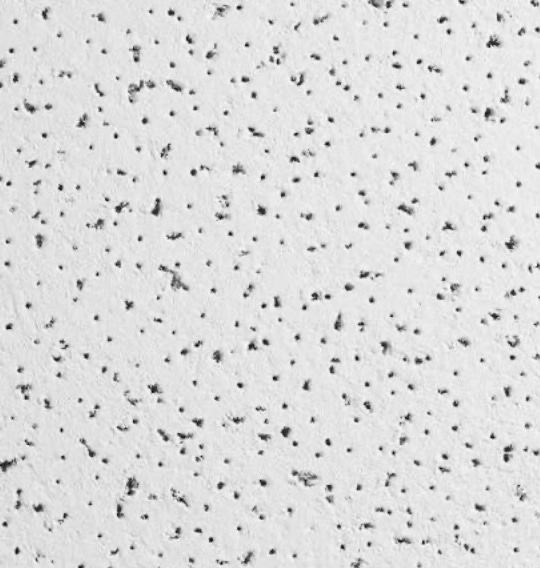
In the mornings, after the nurse cleared away my breakfast after checking to make sure I didn’t hide or fail to eat a single morsel of food (was that a smidge of butter hiding on the plastic knife?!), I would attempt to count the holes in a single tile.
At night, sweating profusely under the Bair Hugger and painfully wide awake from the heat, I would squint through the inky darkness and attempt to count again, willing the monotony of the pursuit to lull me to sleep.
Every morning at 4 a.m. when the nurse would wake me up to take my orthostatics1, I would say a silent prayer to a God I wasn’t sure that I believed in anymore that this would be the last day I’d have to count the holes in the ceiling.
And every day the prayer didn’t work, I’d break down in sobs. When the guttural heaving stopped, I’d go back to counting the holes through bleary eyes.
As a teenager inpatient in a hospital, there was little to nothing in my control. Someone else decided what I ate, how much I ate, when I ate, whether I was allowed to be wheeled in a wheelchair to the bathroom or whether I was too weak and had to stay in bed, who I was able to see or talk to and when they would be allowed to come see me, whether I needed 2 Ensures or 3 that day, if I was allowed to stand on my own two feet for even a minute, and most of all: how long I would have to stay here.
But I could control how long I could count. That was something they couldn’t take from me.
I didn’t particularly enjoy the counting but hell, there was little I enjoyed during those months. The books my grandma sent passed the time, and I will always chuckle at her sending Stephen King’s “It” because it “was the longest book (she) could find.” I didn’t need Pennywise to scare me: Dr. O’Toole was able to do that all on their own. I missed my friends, and I wondered what it would be like to go back to high school when everyone there knew that you were in the hospital because you were starving yourself.
If I was allowed to go back to high school, that is.
There was so much I didn’t know, and there was absolutely nothing I had a say in. As the days turned to weeks and the weeks into months, I slowly realized that my life would be forever altered by this experience. In an attempt to not think about that, I focused on holes in the ceiling. I could control for how long I counted, for how hard I squinted, for how many hours I tried.
Of course, I didn’t realize it at the time, but the hole counting was likely another manifestation of my obsessive-compulsive disorder, of my brain latching on to something other than food, given that was no longer an option.
Dr. O’Toole would pull a chair up next to my bed, staring at me over her horned-rim glasses, telling me that my eating disorder was an attempt to assert control in an uncertain world. It’s a refrain that is oft-repeated about eating disorders and that never really resonated with me. “Hell,” I thought, “I’ve got MANY ways to have control in this world. Just look at these freakin’ holes I can count.”
Over the past 25 years, I’ve spent hundreds, maybe thousands, of hours in therapy: trying to figure out why my brain functions like this, why I wasn’t “normal” like the other kids, what could be the possible source of a firmly entrenched eating disorder. If I just tried harder, was a little more diligent, then perhaps I could crack the code, and finally be “recovered.”
If I just stared harder through the dark room only illuminated by the beeps of the vital signs monitors, I could finally definitely find out the number of holes in an acoustic ceiling tile.
I still don’t know why I developed an eating disorder or suffer from OCD, and I don’t know why it’s been particularly sticky in my life. All I know at this point is that understanding why isn’t going to magically illuminate the “recovered” sign. I have to do the work, every day, for the rest of my life. And so I do.
Honestly, sometimes that feels more daunting than counting holes in the ceiling. I didn’t know this as a 16-year old laying in a hospital bed. There, I wasn’t prepared for this to be a lifelong sentence. I was mostly worried about “how this anorexia will affect my GPA and chances of Ivy League schools!” According to my diary at the time, it was just supposed to be something silly I’d “age out of.”
I waited for that for decades until the day I realized that day was never coming. I was angry for a long time about that - that this was the way I was.
So recently I’ve tried a different tactic - love and acceptance. For the kid I was, for the way I was raised, for who I am today. I’m not sure why it took me 42 years to understand that hating myself for being a certain way wasn’t going to change anything. And it’s only when I approach myself with self-compassion and love have things really begun to soften.
Control was always an illusion.
I was never broken to begin with.
And I never successfully counted the number of holes in the ceiling.
Note: it’s the final day of Eating Disorders Awareness Week - a week that I usually write about, say something about on social media, etc. I’m disillusioned with all social media right now other than old school writing, so it’s living here on Substack. And I’m telling myself something I wish I had been told 20+ years ago: you are not broken. You don’t need to be fixed. You are human and coping the best you can. And I’m so fucking proud of you.
“Orthostatics” is what we called the test for orthostatic postural hypotension, one of the tests I would need to pass in order to be allowed to leave my bed (and then eventually, be discharged from the hospital). Twice a day, a nurse would come in and take my blood pressure and pulse while I was laying down, and then have me stand up for 2 minutes and then retake my blood pressure and pulse. I was deemed “orthostatic” and failed the test if my blood pressure dropped by a certain amount or my pulse increased too much when standing. It was a terrifying test because so much was on the line - I had to “pass” orthostatics for two days straight AND gain the required amount of weight, and then I was free to go home. Laughably, the doctors also said that meant I was “recovered”, but eating disorder treatment in the 90s was really the wild west and quite archaic now in hindsight
Maybe you have already thought this but I think there is a book waiting to come out of you - I’ll definitely preorder and be ready to devour it
Amelia, you have always been and continue to be inspiring. Your honesty resonates with me as a 56 year old still trying to give myself permission to accept herself, faults and all.